-
Oct 2, 2011While many people advocate going to school and getting an education, the reality is that education costs are more expensive than most people realize. Canada thankfully provides reasonably priced educations compared to the rest of the world, but it is far from free. Given that I grew up in Chilliwack, and that I had to move out to Vancouver to attend UBC, I spent approximately $11,000 per 8-month period, which included housing on the UBC campus along with a university food program (which tasted fairly similar to prison food, I imagine). Of those costs, approximately $3,000 went towards tuition, ...read more: The Burden Of A Student
-
Aug 3, 2011The senate passed the deal to raise the debt ceiling today, which means the United States can pay their bills and not default. But truthfully, that’s probably the worse thing that could have happened, since the US has delayed dealing with some very hard problems. First, let me comment on the ratings agencies. Right after a deal was announced, two of the three major rating agencies reaffirmed the United State’s AAA credit rating. These are the same ratings agencies that also gave AAA ratings to the credit default swaps and other securities that were the underpinnings for the 2007-2008 financial ...read more: US Debt Crisis Just Beginning
-
Jul 25, 2011I’m scheduling this post for when I’m out tomorrow for a while, so it’s possible the US may find some common ground on the current US debt negotiations. I don’t it though. Right now things aren’t looking very good for the United States, and the time is almost out where a solution can be reached and implemented before the debt ceiling expires. Negotiations continue to stall, and both sides seem unwilling to deal with some of the harder issues, like coming up with a long term financial strategy that will reduce the deficit and the debt. I actually thought there was only about a 10% chance that the ...read more: US Could Default On Debt Payments
-
 Feb 4, 2011It’s no secret that most of the organized governments in the world are essentially broke. The current debt to GDP ratio in the United States is almost 100%, a fairly incredible number that continues to rise. That number alone indicates that the US is in poor financial shape, and it’s not even that accurate a number. For example, the US has a number of off budget items that are technically debt as well – all the Freddy May and Fannie Mac purchases, Social Security (the US has been taking the money every year and basically putting an IOU in its place) and Medicare. If you factor in all of those ...read more: The Impending Debt Crisis
 -
Jan 25, 2011One of the things I’ve come to realize over the last year is that in most cases, debt is horrible thing. Granted, many businesses look towards debt as a way to fund capital purchases in their beginning stages, and I have no problem with small business loans. But all the other debt that people are addicted to is ultimately bad for the economy in general. There are many people who believe that the reason housing prices are skyrocketing in North America, as well as education costs, is due to the availability of cheap credit. I’m one of those people. Stated another way, housing and education costs ...read more: Economies Based On Debt
-
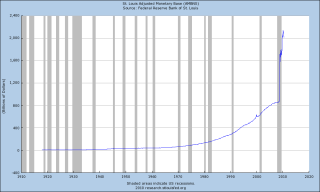 Aug 26, 2010The following graph formed the basis for Glenn Beck’s video talking about hyperinflation, but I thought I would repost it here. Inflation, by definition, is the expansion of the monetary base in a country. While conventionally most people associate rising prices (as measured by the consumer price index – CPI) as inflation, that’s just the symptom of inflation — the root cause in the expansion of the monetary supply. Most people concede that price increases tend to lag inflation by a year or two. So any inflation of the money supply today probably won’t be felt in terms of prices for another year ...read more: An Inconvenient Hockey Stick